
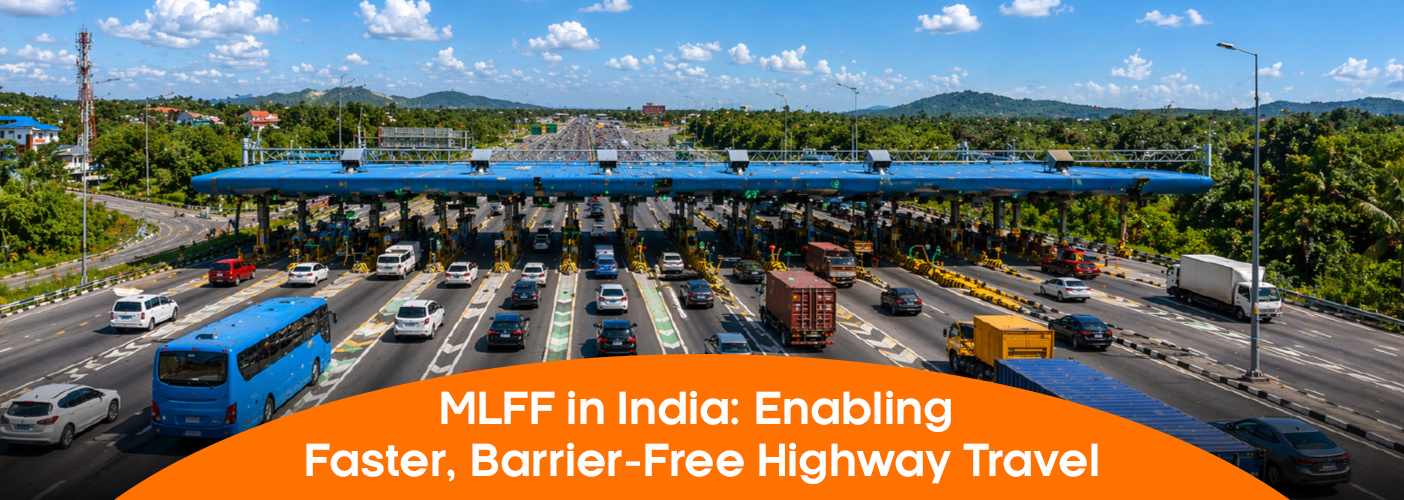
Multi Lane Free Flow (MLFF) represents the next step in digital tolling, designed to enable barrier-free movement, faster vehicle flow, and more efficient highway operations. By combining continuous movement with smarter identification and validation systems, MLFF is helping shape a more seamless and future-ready travel experience across India’s road network.
A clearer view of the technologies enabling barrier-free movement, stronger toll accuracy, and smarter highway travel in India.
Multi Lane Free Flow (MLFF) represents the next step in digital tolling, designed to enable smoother vehicle movement without the delays of traditional toll plazas. Supported by technologies such as FASTag for RFID-based identification and payment, and ANPR for number plate recognition and validation, MLFF creates a more seamless, accurate, and efficient tolling environment. Together, these systems reflect the shift toward barrier-free travel and a more intelligent highway experience in India.
India’s highways are evolving beyond physical expansion. The next stage of progress is not only about wider roads and stronger connectivity, but also about how vehicles move through the network with less friction and better efficiency.
That is where MLFF, or Multi Lane Free Flow, becomes highly relevant.
MLFF represents a broader shift toward smarter, faster, barrier-free, digitally enabled highway travel. It is designed for an environment where toll collection should support movement, not interrupt it. For vehicle owners, FASTag users, transporters, fleet operators, and logistics businesses, understanding MLFF means understanding the future direction of tolling in India.
The future of tolling will not be defined only by digital payments, but by how seamlessly the entire travel experience is designed.
MLFF stands for multi-lane free flow. It is an advanced tolling model that allows vehicles to pass through a tolling zone without stopping at a traditional toll plaza barrier.
In a conventional toll system, vehicles slow down, enter controlled lanes, and wait for toll validation or deduction. MLFF changes this operating model. It is built to support toll collection while the vehicle remains in motion, helping reduce stoppage, improve traffic continuity, and create a more efficient journey.
In simple terms, MLFF makes tolling feel less like a checkpoint and more like an integrated part of the road experience.
At its core, MLFF is designed to reduce friction, improve movement, and support a more intelligent tolling environment.
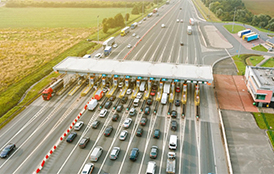
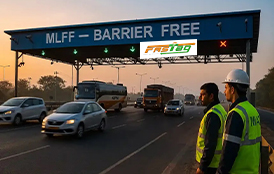
MLFF is the broader barrier-free tolling framework, but for that framework to work effectively, it depends on technologies that can identify, validate, and process vehicles accurately while they are still moving. This is where FASTag and ANPR play an important role.
FASTag supports RFID-based vehicle identification through the tag placed on the windshield and enables digital toll deduction through the linked payment system. It allows the tolling environment to recognize the vehicle quickly and process the transaction digitally.
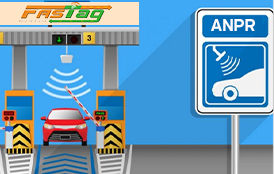
ANPR, or Automatic Number Plate Recognition, adds another layer of accuracy and control. It uses camera-based technology to read the vehicle’s number plate for recognition, validation, exception handling, and compliance support.
Within an MLFF environment, these technologies work together in the background. FASTag supports tag-based authentication and payment flow, ANPR supports number plate-based recognition and verification, and MLFF brings them together into a unified tolling model designed around continuous vehicle movement rather than physical stoppage.
This integration matters because it supports smoother traffic flow, stronger toll accuracy, better vehicle recognition, lower dependency on manual processes, and a more convenient user experience.
In simple terms, FASTag and ANPR are enabling technologies, while MLFF is the advanced tolling model that uses them to deliver a seamless travel experience.
MLFF is designed to process tolls digitally while the vehicle continues moving through the tolling zone.
As the vehicle approaches and moves through the designated tolling area, the system begins identification and transaction processing.
The tolling environment uses available technologies such as FASTag-linked RFID identification, ANPR cameras, sensors, and backend verification systems.
The system checks and matches vehicle details using the available identification layers.
Once the vehicle is identified and validated, the toll amount is calculated and charged through the linked digital process.
Because tolling happens without traditional barrier-led stoppage, the road experience remains smoother and more continuous.
The toll event is digitally logged for transparency, system control, monitoring, and operational efficiency. For the user, the result is simple: less stopping, less waiting, and a more seamless highway journey.
MLFF is designed to process tolls digitally while the vehicle continues moving through the tolling zone.
MLFF reduces repeated stop-and-go movement, allowing vehicles to move more naturally through the highway network.
By reducing toll-related bottlenecks, MLFF supports better traffic movement on busy routes and major corridors.
Less interruption at toll points helps improve journey continuity and reduces cumulative travel delay.
For everyday users, MLFF creates a simpler and less stressful tolling experience. For commercial drivers, it supports more predictable road movement.
When supported by FASTag and ANPR, MLFF can strengthen vehicle recognition, digital validation, and transaction reliability.
For fleet operators and transporters, smoother toll passage can support better trip efficiency, stronger planning, and improved asset productivity.
MLFF lowers dependence on booth-led, stop-based processes and supports a more automated tolling ecosystem.
As India’s roads continue to modernize, MLFF offers a framework better aligned with scale, digital infrastructure, and long-term mobility needs.
The introduction of FASTag across 275 toll plazas marked an important step in India’s digital tolling journey. At that stage, the significance of the rollout was not only in the number of toll points covered, but in what it represented for the future of highway operations.
Rather than remaining a limited pilot, this expansion showed a clear move toward structured, technology-enabled toll collection. It signaled that digital tolling was beginning to take shape as a practical system, not just an experimental concept.
This rollout helped establish:
For road users, it created access to a faster and more convenient tolling experience.
For the larger tolling ecosystem, it created momentum, operational confidence, and a stronger foundation for digital adoption.
As digital tolling continues to evolve, the need for user clarity becomes just as important as the technology itself. Systems such as FASTag, ANPR, and MLFF are gradually shaping a more seamless and intelligent tolling environment, but for many users and businesses, understanding how these systems connect is essential to building trust in what comes next.
This is where Fastag Suvidha plays a meaningful role.
Beyond access and adoption, the larger need is for clear, reliable understanding. Vehicle owners, transporters, fleet operators, and logistics businesses all benefit when tolling is not only more efficient, but also easier to follow, easier to trust, and easier to adapt to.
At Fastag Suvidha, our perspective is simple: the future of tolling should be seamless in experience, efficient in operation, and clear in how it works.
By helping users stay informed about evolving tolling models and emerging highway systems, Fastag Suvidha aims to serve as a trusted knowledge partner in the shift toward smarter, more connected mobility.
Stay informed about the future of tolling.
Learn how smarter systems are shaping highway travel.
Soon, all toll payments on national highways must be done through FASTag.


For more details on Fastag Suvidha, please contact us.